Threshold Between Worlds
Near Death Experiences

Welcome back to our corner, sweetie. I’m glad you snuck in before the rain. Since that thunderous sky outside is so ominously dark, I’ve lit this little flickering flame. Seems particularly appropriate for today’s discussion about Near-Death Experiences (NDEs). We’re about to enter the luminal space between life and death, where certainty dissolves and mystery begins.
The night before David died, something eerie happened. He’d been dozing fitfully, in and out of a morphine haze, when suddenly he gripped my hand, and in the strong, clear voice I hadn’t heard in weeks, said, “Roberta, I’ve seen...” Then he paused, searching for words that wouldn’t come. On his face an expression showed, not of fear or dread, but of wonder.
What had he glimpsed? Was it a space between worlds? Since then, I’ve learned he was not alone - far from it – so I’ve explored and am sharing what his insight into something transcendental might have been like. And what his and other journeys might reveal about the nature of consciousness and the possibility of an afterlife.

A doctor comes to believe in the unbelievable
Dr. Bruce Greyson was a skeptical psychiatrist, raised in a household where science was gospel and the idea of life after death rejected. But then he met Holly.
In his book After, Greyson describes their first encounter. As a young intern, he was called to the emergency room to evaluate a woman who’d overdosed. While he ate his lunch and spoke with her roommate Susan in an adjoining space, he spilled spaghetti sauce on his tie. All the while Holly lay eyes closed, and a room away, unresponsive.
The next morning, Holly opened her eyes and proclaimed: “I saw you talking with Susan. You were wearing a striped tie, and you got red sauce on it.” She described his and Susan’s whole conversation and even the room layout - details she couldn’t possibly have known in her comatose state. Greyson was astonished – and energized. That spaghetti stain initiated a half century saga in which Greyson gathered accounts from doctors from around the world, a surprising number of whom described patients with near death experiences (NDEs). Even the famed Elizabeth Kubler Ross (mother of Stages of Grief), based on her encounters, had become a believer. From over 1000 accounts of NDEs, Greyson concluded that the mind continues to think after the brain has ceased its electrical signaling and is clinically dead.
The investigation deepens
Investigative reporter Leslie Kean followed the same breadcrumbs, not as a scientist but with the tools gained from a lifetime of tracking down government conspiracies. In Surviving Death, she documents her journey from skeptic to evidence-based believer.
Although it was not an NDE, Kean reflects on a sentinel event that began to change her thinking. It involved consciousness that transcended a lifespan. James Leininger was a Louisiana boy who at age two began having nightmares about plane crashes. He’d wake screaming, “Airplane crash on fire! Little man can’t get out!” Over time, James revealed impossibly specific details: he was a pilot named James Huston, flew a Corsair, was shot down at Iwo Jima, flew off a boat called Natoma Bay. His parents, initially dismissive, researched and found every detail matched a real pilot who died in 1945. And that was not the only case like this. Worldwide, Kean uncovered similar cases among children who simply knew too much to explain.
The diverse tapestry of death
What are NDEs? As one NDE researcher emphasized about those affected, “They’re not delusional,” and what they’re experiencing is “not dreams or hallucinations”. NDEs are coherent and occur when the brain should be incapable of generating any experience at all.
A prospective study of 344 cardiac arrest survivors (The Lancet, 2001), found that whether you’re a Baptist from Alabama or a Buddhist from Tibet, your NDE is remarkably similar. People reported hovering over their physical body, tunnels of light through darkness, reuniting with dead loved ones, seeing their whole life flash before their eyes, and an overwhelming feeling that love is all that matters. Some were given no choice or were commanded to return. Although interpretations varied (Christians saw Jesus and Hindus met Krishna), the underlying experiences were remarkably constant.
The end of brain activity?
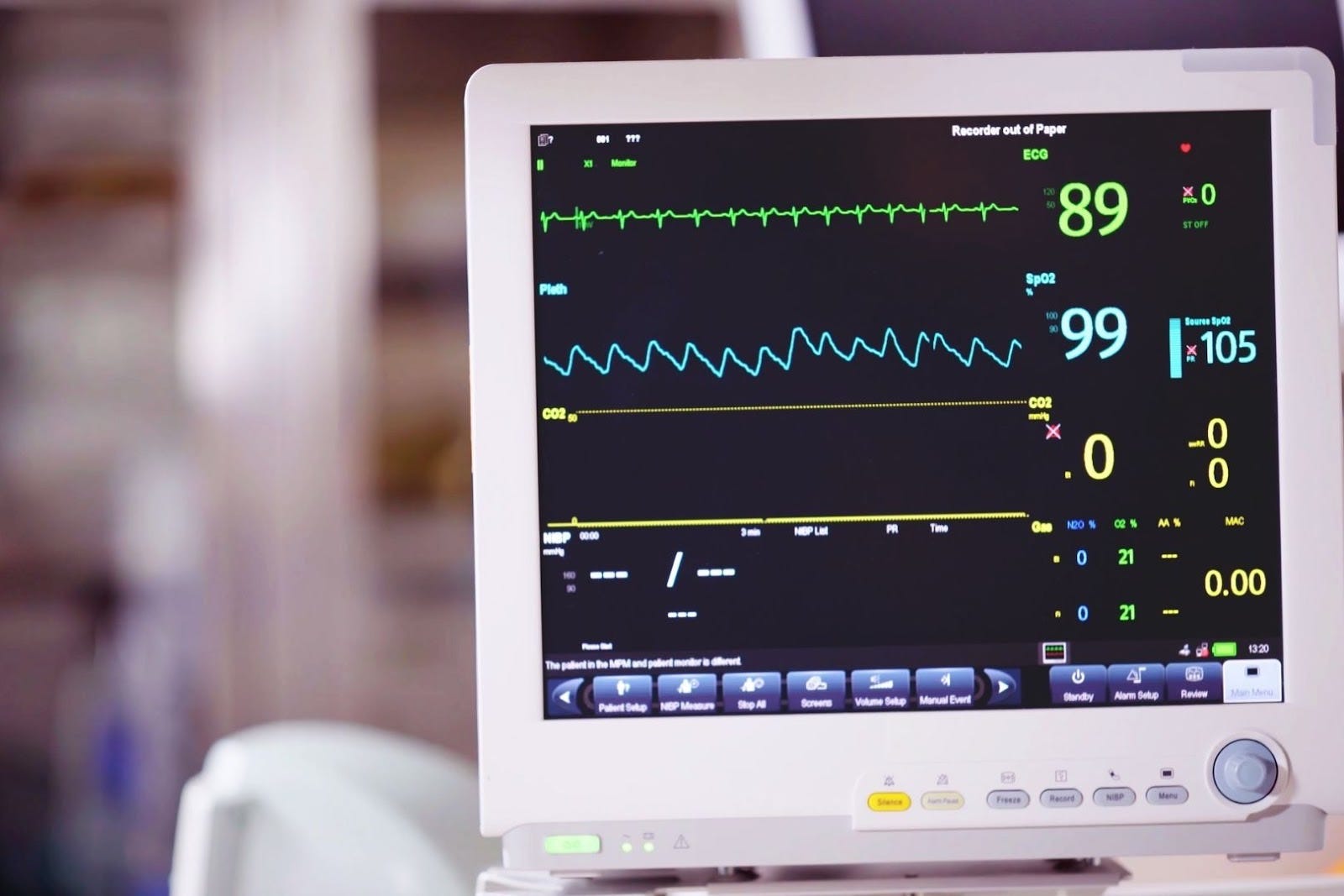
Case reports are all well and good but as a scientist, the only thing that convinces me is hard data. Enter AWARE-II, a multicenter study, published in Resuscitation (2023) which monitored 567 cardiac arrest patients using sophisticated EEG monitoring during CPR. Not just a few but fully 40% of survivors reported that they knew what was happening during cardiac arrest and for some this lasted up to 60 minutes into resuscitation attempts. Mind you, their lack of EEG activity should have made these folks incapable of forming memories or generating experiences.
Similar data were published in a study in the premier journal, Nature Communications (2023). Surges of gamma wave activity, the same frequencies associated with heightened awareness and visual processing, were seen in the brains of dying patients. We’re not talking random bursts here. The surges occurred specifically in the temporo–parieto–occipital (TPO), a mysterious brain region associated with religious experiences and seizures. Brains became hyperconnected between the TPO and the prefrontal cortex in regions associated with dreaming and altered states of consciousness. For 30 seconds to 2 minutes after breathing and heartbeat had stopped and life support was withdrawn, gamma waves continued. After their hearts had given out, one in five survivors reported seeing and hearing.
These studies shatter our world view. If consciousness continues after its purported generator – electrical activity in the brain - ceases functioning, is this an echo of a former life or a summons to a future existence?
Biochemistry of near death
How is any of this possible? What’s happening? Science reveals that the dying brain becomes a kind of internal illicit drug dealer releasing consciousness-altering chemicals you’d be afraid to buy on the street.
Neurotransmitters like serotonin and endorphins (morphine-like chemicals), known for transmitting feelings of well-being and transcendence, flood every synapse. The brain produces significant quantities of naturally-occurring DMT—dimethyltryptamine—the same compound found in ayahuasca – the South American drug that creates one of the most powerful hallucinogenic experiences known. Finally, massive quantities of glutamate are released which might trigger the panoramic life review reported by many with NDEs. Is this the equivalent of the brain providing a munificent final super or is it something more transcendent?
Hallucinogens – cousins to NDEs
DMT has been termed the “spirit molecule” based on Dr. Rick Strassman’s groundbreaking research in the 1990s. Repeatedly, people taking DMT under supervision reported that they’d met beings of light, experienced death and rebirth, and had profound feelings of oneness with the universe that permanently changed their worldview.
Psilocybin and LSD, too, produce what neuroscientists call “disruptions in the default mode network” - the brain’s ordinary pattern of self-referential thinking. On mind-altering drugs, the ego dissolves and the boundaries between self and nature disappear. All existence feels interconnected.
And here’s the crazy kicker. Psychedelics can trigger neurogenesis—the growth of new brain cells that enhance neural plasticity. Hallucinogens don’t just alter consciousness temporarily. They can cause a lasting rewiring of the brain.
Are NDEs a natural psychedelic experience?
The similarities between NDEs and psychedelic experiences are so striking that some researchers suggest NDEs might be endogenous psychedelic experiences. Both states feature ego dissolution; encounters with angels, deceased relatives, or alien entities; life reviews where past actions are seen from multiple perspectives; and visual hallucinations including tunnels of light, impossible colors, and landscapes of indescribable beauty.
If you’ve had an NDE or gone on a psychedelic trip, you are changed. You become more spiritual in their fearlessness about death, have increased compassion and put more value on connections than on acquiring stuff, and feel more in tune with nature and beauty.
Yet there are also dissimilarities. NDEs occur when you are unconscious and not on drugs. They often include accurate observations, sometimes at distant locations, while psychedelic experiences can be influenced by “set and setting.” Even more striking, during an NDE, your encounters are only with persons deceased, never living. As Kübler-Ross noted, dying children who want their living parents never see them in NDEs—only those who have already died appear. Finally, as a psychedelic user, you can sometimes remind yourself you’re on a drug, while as someone who’s had an NDE, you insist your experience was “more real than real,” a direct encounter with some ultimate reality that makes ordinary consciousness seem like the dream.
The blind can see
Perhaps no aspect of NDEs is more mind blowing and hard to explain than the experiences of people who have been blind from birth who, during NDEs, begin to see.
Vicki Noratuk had severe oxygen deprivation at the time she was born and became completely blind. Yet during her 1973 NDE following a car accident, she found herself floating above the scene, observing details she later described with startling accuracy. She saw the color and style of the wedding rings on her hand (which she’d never seen), what the doctors and nurses looked like, and the equipment in the room. It’s what scientists now call “mindsight” - an impossibility that has been reported in dozens of cases.

What David saw in the outer limits
As I tend David’s garden, where his ashes nourish new growth, I contemplate these profound mysteries. NDEs, recollections of past lives, and mindsight all point toward the same uncomfortable truth: consciousness refuses to fit in the neat materialist box we’ve built for it.
As scientists, we can map brain activity, demonstrate biochemical changes, and document what people experienced. But we can’t tell you what consciousness really is. Perhaps the brain is a receiver, not a generator. Perhaps that’s why David smiled in his final days, even as his body failed. Like Holly seeing through comatose eyes or Vicki seeing through blindness, he’d glimpsed something that transformed fear into wonder, ending into beginning.
Dr. Stuart Hameroff and Sir Roger Penrose propose in their Orchestrated Objective Reduction theory, updated in Physics of Life Reviews (2024), that consciousness arises from quantum processes in neural microtubules. If true, consciousness might exist at the intersection of classical and quantum realms, neither purely physical nor entirely transcendent. Like quantum entanglement, does consciousness neither exist nor cease to exist until you observe it? Can your essence continue in the multiverse just not in this universe?
TAKE-HOMES
Scientists have documented thousands of cases of NDEs and concluded that these occur in 10-20% of cardiac arrest survivors, with consistent features across cultures. Recent neuroscience reveals organized brain activity during clinical death, challenging materialist assumptions. The dying brain produces a cocktail of hallucinogenic compounds, including DMT, creating experiences much like being on psychedelic drugs. Yet NDEs involve encounters with only deceased, not living persons and are described as “more real than real”, raising the possibility that consciousness transcends death.
Whether NDEs are endogenous psychedelic experiences triggered by the dying brain’s chemistry or genuine glimpses beyond the veil—or perhaps both simultaneously—they consistently deliver the same message: consciousness is more mysterious than you imagine, death might be transition rather than termination, and love appears to be fundamental to existence itself.
As Kübler-Ross wrote near the end of her life, after multiple strokes left her waiting for her own transition: “The greatest gift we can give our loved ones is to let them know it’s okay to die.” Not because death is final, but because it might not be.
Join the conversation – I look forward to hearing your thoughts and experiences. Have you or someone you love glimpsed beyond the threshold? What do you make of the parallels between NDEs and psychedelic experiences? Visit Fully Informed Conversations (https://www.fullyinformedconversations.org/) to explore these mysteries further.
Livingly yours,
Mom
Roberta Ness, MD, MPH