The Death Business
Your loved one as a commodity

Welcome back to our favorite corner, darling. No worries if you hate the music I’m playing -- I filched it from the funeral parlor down the street and I agree it’s awful. And that’s not the worst of today’s blog, which lifts the veil on America’s funeral industry. Here, grief meets greed, and your final farewell can cost more than your first car. Grab your teddy bear because what I’m about to share might make you angry enough to need to punch something. But hopefully, you’ll leave a lot wiser about planning your own exit strategy.
When David died, I thought I knew what to expect. I’d been through this with my parents, after all. But nothing prepared me for the price tags and the slick up-selling and the guilt trips that if I didn’t buy the luxury package, I didn’t love my man.

There’s proceeds in them there corpses
Before the Civil War, the idea of a funeral parlor and a fancy casket wasn’t a thing. Up until then, average Americans handled death the way we handled birth -- as an intimate matter managed within the caring circle of the family. Women like your great-great-grandma washed and dressed the body while your great-great-grandpa built a simple pine coffin in the barn and dug a grave under the old oak tree. The whole community dressed in their Sunday finery and gathered for the wake. In the parlor, they gossiped, shushed the little ones, and drowned their sorrows in booze (home brew or otherwise depending on socioeconomics).
Everything changed when, during the Great American war, families clamored to have burials back on the farm for soldiers who died for “The Cause” - abolition and the Old South, take your pick. During transport, things got smelly and ugly. Enter embalming, a practice used by ancient Egyptians. Embalming took America by the throat but interestingly, has never caught on in most of Europe where bodies are kept from decomposition until burial by refrigeration.
Entrepreneurial “undertakers” (because they “undertook” to handle the arrangements) saw opportunity in grief. By 1900, death had moved from the home to the “funeral home,” and a multibillion-dollar industry was born.
The what and why of embalming
Below the funeral parlor with its soothing music and soft lighting is the working crypt where morticians transform your loved one from a gruesome chalky cadaver to that person you always remember smiling back at you. Embalming is the key ingredient to performing this wondrous trick. After dumping down the drain, the dead person’s bodily essence (blood, stomach/bladder/colon contents), a formaldehyde-based chemical mix is pumped into those same cavities. The chemicals used are so toxic that the mortician must don full protective gear. Tens of millions of gallons of this stuff then gets dumped into your local water supply each year. Terrifying. So why do it?
Americans embalm to erase death. Embalming is the perfect air freshener for the body, eliminating those ghastly smells and pinking up those ashen cheeks. But don’t think that embalming prevents your loved one from decomposing. The whole process is designed for the photo opp at the viewing, not for long-term preservation. As you know from seeing mummies at the museum, we all ultimately turn to skeletons and dust.
The cosmetic touch
The second step in corpse beautification is the application of cosmetics. Here’s where morticians get to outdo each other in artistry. Your deceased will get glue applied to their lashes to shut the eyes, and wires or stitching joined to their lower jaw to achieve the desired expression. Concealers and blush restore natural skin color and eliminate signs of disease and trauma. Using photos as a guide, hair conditioning and spray are applied to create that perfect style. Nails are manicured. And that costly suit that’s been hanging in the closet in mothballs for gosh knows how long embellishes the physique. Rosy and reincarnated, your baby is now ready for an open viewing.
The casket racket
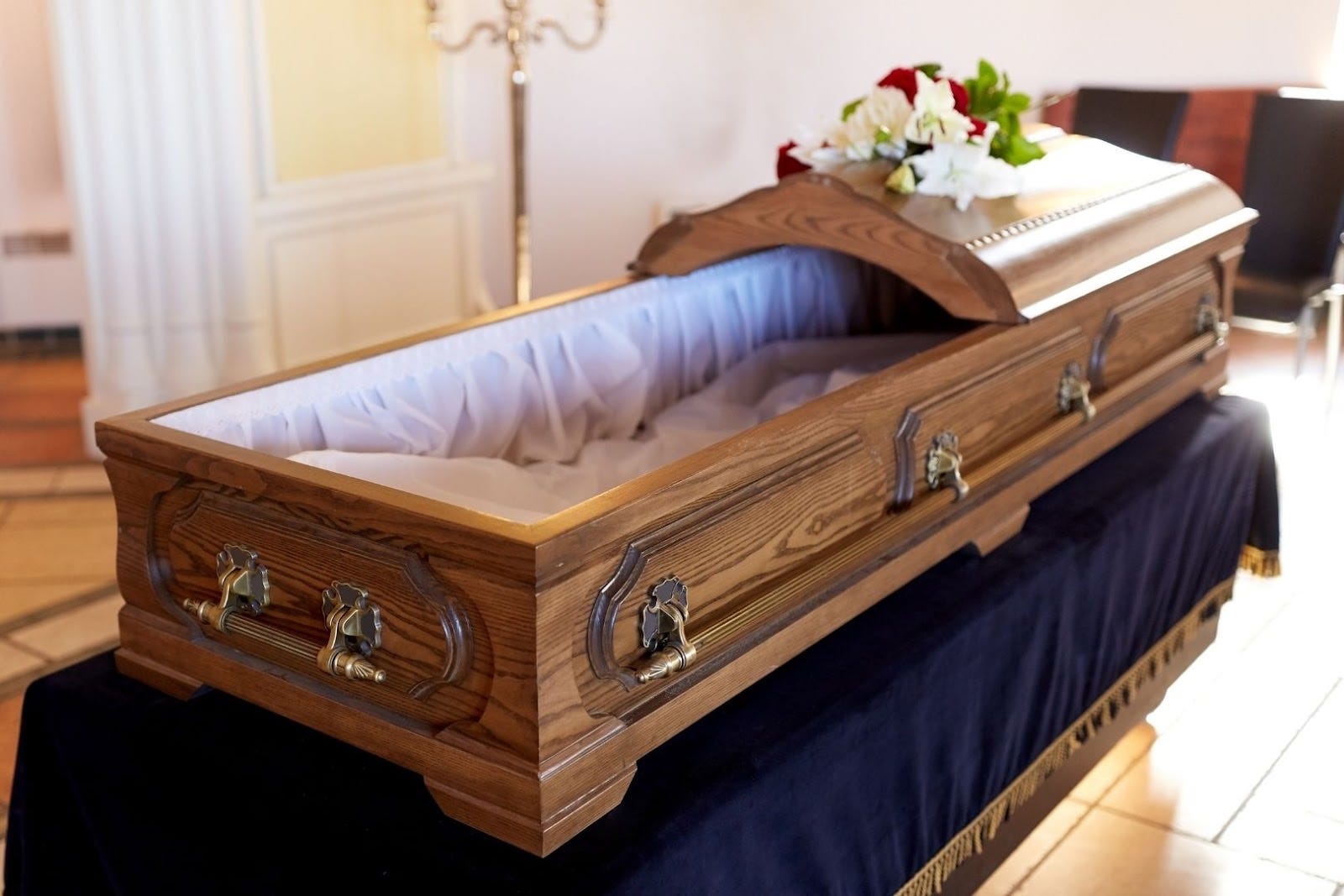
All good American entrepreneurs know that profits increase if you can cut costs and/or raise rates. Funeral parlors have made a mint using both tactics. Remember old Western movies? Caskets were six-sided boxes because that standard design followed the body’s shape. That was sensible but not economic. Rectangular caskets require less labor and only a bit more wood (cut expenses), and they could be sold for more money (raised outlays). Genius.
Today, the average cost of a casket is more than $2,000, but walk into any funeral home and you’ll see a “casket showroom” that walks you through a panoply of gleaming metal sarcophagi. Upon entry, you find the $15,000 bronze beauty, hand finished, ebony trim. By the time you’ve made your way to the $4,000 model, it seems like a steal. This kind of marketing is called “anchoring,” and it works.
Now here’s what they don’t tell you: None of the 50 states legally require a casket for burial or an urn for ashes after cremation. You can be buried in a shroud or a used refrigerator box (kidding about the last one, but you get the point). And here’s a useful tip - funeral homes are legally bound to accept caskets that consumers have purchased from another source -- including Costco or Walmart or Casket Emporium, where they start at $999 and even that’s a hefty mark-up.
The great casket debate: Open or closed?
I remember attending the open casket funeral of a long-suffering patient. Edging up to the coffin, I gazed down upon a face as lovely and placid as she must have been years before we met. I couldn’t help but think, “You are so much more beautiful in death than you were at the end of your life.” Her husband seemed to agree as he calmly kissed the forehead of the visage he married, not the agonized suffering visage of his dying wife.
When closed is wiser
Religion often takes a lead in deciding how the deceased should attend their own funeral. Jews and Muslims do not allow open coffins. Catholics and Eastern Orthodox often prefer them. Cause of death also guides the decision since trauma or severe illness may overwhelm the mortician’s ability to perform miracles. And let’s be practical: if children will attend or if family members are highly emotional, a closed casket might spare everyone those much-feared funeral home hysterics.
Bottom line? Your last visit with your loved one is personal and no one should tell you how it should look. You can mix it up by opening the casket lid for family visitation then closing it to the masses. It’s up to you and your family, trying (as with all things about dying) to balance respect for varying opinions with your own needs.
Cemeteries: Eternal rest or real estate?
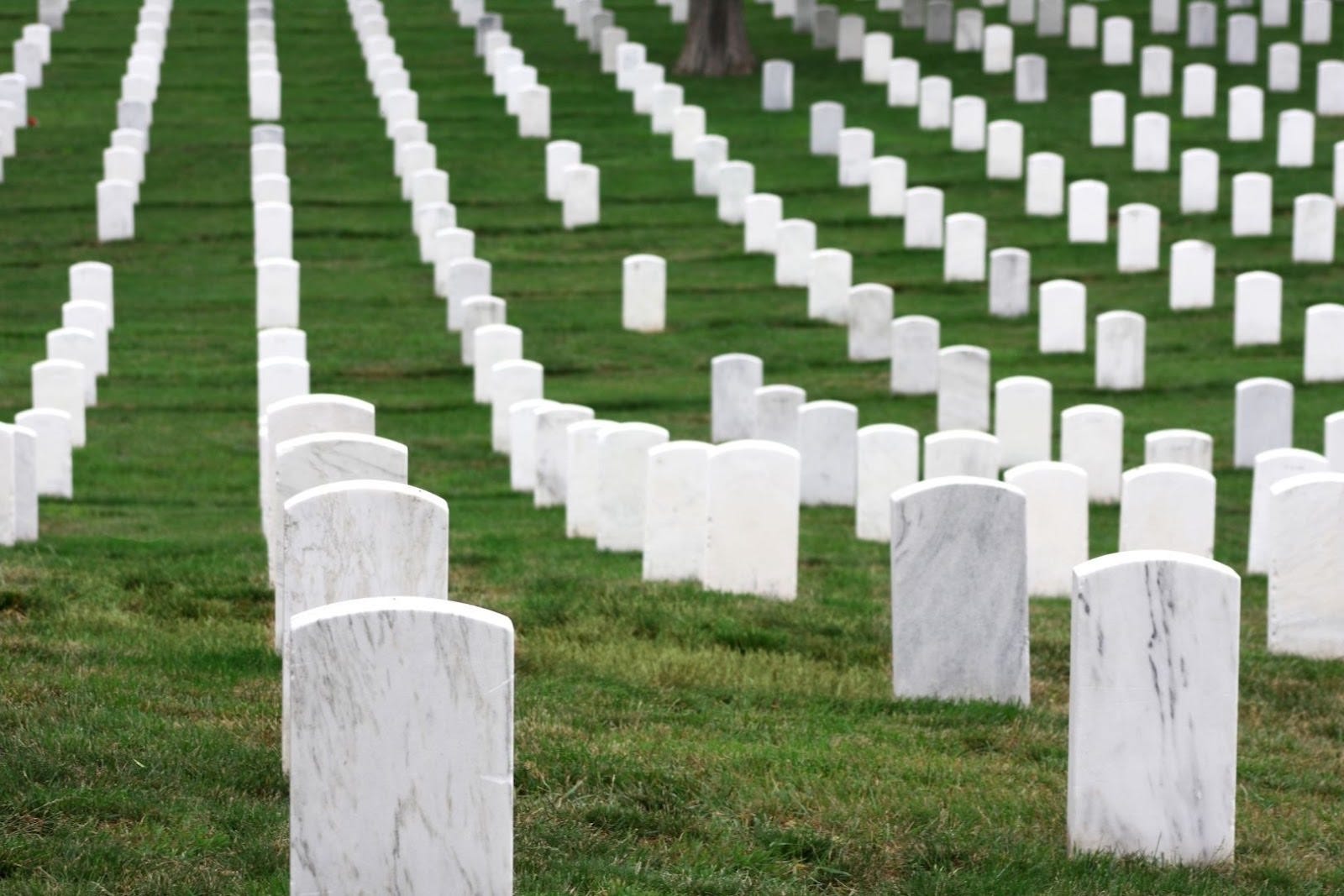
Modern cemeteries are lovely and serene with their manicured lawns and flowering hedges. We put David’s mom to rest beside his long-gone dad, her grave marked by a gleaming black marble headstone that bespoke her cherished dedication to teaching. Each time we left flowers, we felt warm and fuzzy. But mind you, we paid for the privilege. Cemetery plots are the costliest land deal you’ll ever make. A standard plot is 3’ by 8’ and costs anywhere from $1,000 in rural areas to $25,000 in Manhattan. Assuming the average - $2,500 and converting to standard real estate pricing - that’s $4,719,000 per acre. Then add the headstone and “perpetual care” fees and the business becomes pretty darn lucrative.
In addition to costly real estate, the cemetery business model is brilliant in creating revenue. Take the same piece of land and sell it over and over (through multiple burials in family plots). Then create rules that generate even more profit - you must use our approved headstone vendors (i.e. buy from Uncle Mac); flowers only in our own hand-crafted vases; visiting hours limited to prevent paying overtime.
Sell, sell, sell
The average funeral service with caskets and burial is $8,300, and the median cost of a funeral with cremation is $6,280. David’s cremation was a bargain at $4000 but this bottom basement price required me to drive to the funeral home to collect his ashes, which I found packed in a freezer bag within a small pine box. (I later learned that the crematorium charged only $500).
The Federal Trade Commission created the Funeral Rule in 1984, requiring funeral homes to provide itemized pricing. Yet, go to many funeral home websites and you’ll find no prices. Call a funeral home and you’ll often struggle to get transparent pricing information over the phone. Why? Because the industry has a reputation for wanting a funeral consumer to enter their premises for a face-to-face hard sell ‘up-sell’ of funeral products and services.
Yucks: The Industry’s dark secrets
Emotional manipulation during the most vulnerable time in your life
Hidden fees for everything from “professional services” to “weekend surcharges”
Proactive funeral plans that families discover don’t cover current costs
Claiming certain products or services are “required by law” when they’re not
What’s really important?
David said on his deathbed, “I’ll die but my memory will live on.” He elected to be cremated, and we scattered his ashes in the garden we constructed in our gated townhouse backyard as he lay dying (now pampered by me like a much beloved dog). He had an ardent belief in honoring his vibrant life, not his dead body.
The death industry wants you to believe that love is measured in dollars spent. But love is measured in memories shared, hands held, tears shed, and stories told. Everything else is just marketing.
The coffin color can be green
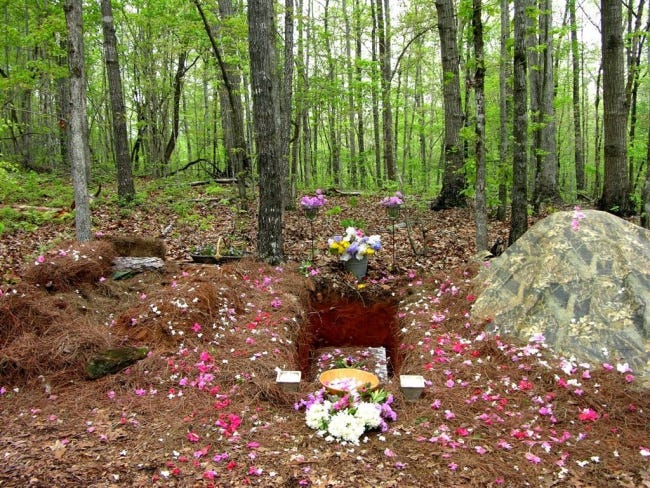
Is there any alternative -- any way to venerate a loved one in that is more natural, less expensive, more eco-friendly? Answer: go back to our roots. Remember the plank wood casket and the home burial in the back yard? That’s what’s now being called Green Burial - a newfangled idea as old as the hills. (In the name of truth in journalism I must reveal that this is what I have chosen in my Will) There’s nothing exotic about going green. Green burials are simply ones that use no embalming chemicals, wrap the body in a simple shroud or enclose it in a biodegradable casket, and use natural markers like trees or native stones. Even if you still want a plot in a cemetery, the costs are often half of what you’d pay for the traditional deal.
In most states, believe it or not, it’s legal to do this at home (see the next section for details). According to research by the Funeral and Memorial Information Council, 64% of respondents aged 40 and over would like to have a green burial, up from 43%. It’s not just about cost -- it’s about environmentalism. Not to be gruesome but Mother Nature loves a dead body.
The momentum is building. Green cemeteries are still few but are growing in number. They now number about 470, up from about 100 in 2000 and they now represent about 1 in 20 burials. Moreover, even traditional and national cemeteries are adding green sections.
Can you do this at home?
Collecting the body in your own pick-up truck from the hospital or nursing home and burying it on your own private property is perfectly legal in almost all states. Only Indiana, California and Washington State outlaw the practice totally.
Several other states (Connecticut, Illinois, Indiana, Iowa, Nebraska, New Jersey, and Michigan) require funeral directors for various parts of the process and in New York and Louisiana, you pretty much can’t blow your nose without a funeral director present. Otherwise, there’s no need for oversight.
For home burial, you’ll need to:
Get the death certificate completed by a doctor
Obtain a burial permit from your county
Follow local zoning laws about burial depth and distance from water sources
Create a family cemetery on paper (in Texas, the definition of a cemetery is a place of “one or more” burials).
Find information on “how to” at Green Burial Council. On the Way to the Green Burial Cemetery: A Guide for Families - GREEN BURIAL COUNCIL
The new death entrepreneurs
Beyond green burial, there’s a growing desire to get innovative. I must say that some of these ideas seem a bit outlandish to me, but here’s what’s being tried:
Water cremation (alkaline hydrolysis) -- gentler on the environment
Memorial reefs where cremated remains help restore ocean habitats
Mushroom burial suits that help decompose the body naturally
TAKE-HOMES
The funeral industry counts on you being unprepared, overwhelmed, and willing to “do right” by your loved one. But doing right doesn’t mean going into debt or overwhelming the size of your neighbors’ family monument. I recommend that you
Talk now, while everyone’s still around. What do each of you want? What can you afford? Where are the important papers?
Shop around. The FTC Funeral Rule is your friend. Demand that price list. Then compare prices, something you should do exactly because funeral homes will strongly discourage you from doing it.
Consider all options. If your state allows it and your heart calls for it, why not consider the pine box under your loved one’s favorite tree? Why not allow your parlor to host, among the many other joyous gatherings it’s seen, one last celebration of a life well lived?
Join the conversation
I want to hear your funeral stories. And don’t forget to visit Fully Informed Conversations (https://www.fullyinformedconversations.org/)
Livingly yours,
Mom
Roberta Ness, MD, MPH