Prologue
February, 2020. Halong Bay, Vietnam.

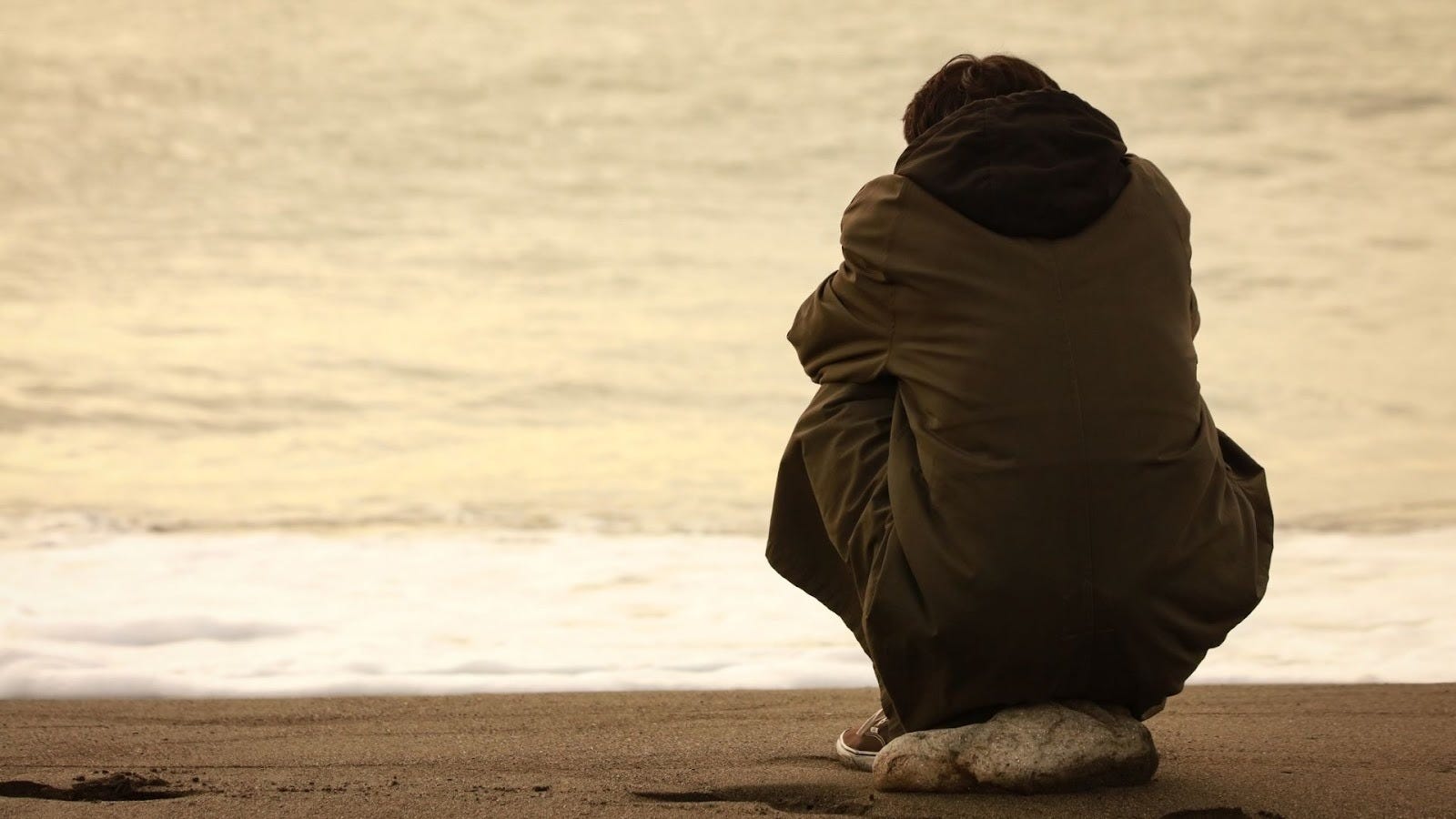
I’d never before slept on a beach and dreaded the idea, but what other choice did I have? Every other place to lay my head had been blocked. Now even the beach seemed unobtainable. Where was it? It couldn’t be far, but how far?
A chorus of Asian Green Bee Eaters twittered in their staccato sopranos, but no matter how I strained, I couldn’t hear a baritone of lapping waves. My best friend, the map program on my mobile phone, had turned against me - uselessly spinning a hollow blue dot.
For years, I’d aspired to reach as many international destinations as my parents had. They traveled in style. Everything Five star. Once, I’d checked out a hotel they’d stayed at on a floating island in Udaipur, India. Curiosity got the better of me, so I forked over $130 for a fixed price dinner reservation. Unlike my parents, though, I passed on the $1000/night accommodations. The restaurant booking allowed me to board a gold encrusted hotel gondola richly draped in ruby and emerald velvet. A tall, bronze man, displaying his muscular structure like something out of my Grey’s Anatomy textbook poled me silently through black water. What was on the other side? A paradise? A warren of kingly suites? Who knew, and even today who knows? Having gained entry to the sanctuary of formal, multicolored flowering gardens, I thought I could snatch a peek inside one of the rooms being cleaned. No luck. In the end my only views came from stock photos. But blowing that kind of money on a room for the night seemed absurdly wasteful, so ‘Ugly American’. Instead, my strategy was to weasel my way into as many academic jaunts as I could without raising eyebrows, then added a week or two of homestays and local bus rides to appease my curiosity. It was far from five star. It was traveling in my own idiosyncratic way.
My way, though, did not include this.
A dense tangle of lantana, Rangoon creeper, and bougainvillea hemmed the main road, obscuring anything behind. Looking in vain for an opening, I hiked on and on. My backpack grew heavier with each step. My anxiety grew greater with each passing minute. The sun ticked ever lower toward the horizon. I felt dizzy. Maybe the sweltering heat caused my lightheadedness as it did when I stood up after a blistering hot bath. Or maybe the dizziness came from panic. Whichever it was, I couldn’t afford to pass out on an abandoned road in the middle of nowhere.
Finally, I spotted a small parting in the foliage and pressed through onto a darkened footpath. Branches and thorns reached out, clawing at exposed skin. But I didn’t have the luxury of stopping to attend to bleeding. I couldn’t slow down each time I had to wrench my rolling bag out of another rut. Before it got completely dark, I had to get to the beach.
Then, suddenly, light. A new world emerged.
Before me lay the ocean, stretching out in a long arc of deserted coastline. The sun, flaming just above the horizon, sprinkled shimmers over pristine, gently lapping water. Silhouettes of volcanic rock columns rose in the distance.
For a long moment, I stood in awe. Then I looked into the sky and shuddered. The light had already begun to lose heart and within minutes would surrender entirely.
Now a new set of problems arose. I had no sleeping bag, let alone a tent but I also had no intention of lying directly on wet sand that would soak my clothes or dry sand that would blow into my face. Ok stop, I thought. I’d been asked to speak at Hanoi University as an expert on how to improve creativity. I must be clever enough to craft a make-shift campsite.
Nearby, a heavy wooden beach chair had been entangled with washed up trash. Closer yet stood a splintering picnic table. Dragging the chair close to the table and covering it with a mattress of tattered plastic bags and a blanket of the two sweaters I’d brought, made for passable bedding.
For the first time, I thanked the autoimmune disease that years ago had stolen 30 pounds from my small frame and I’d always before cursed. It left me with a myriad of food allergies, so I always stocked my backpack with fruit, vegetables, and jerky. Now the rations made for a meager dinner.
I turned off my mobile to save battery and gave myself over to the enveloping blackness, blanket of stars, and tropical breeze.
As I dozed on and off, my mind wandered back to a year earlier – the coveted lifetime awards for scientific achievement in public health I’d won, the pack of federal agencies that regularly consulted me, my nomination to a presidential commission. How did someone with that kind of pedigree end up in a predicament like this?
Before retiring from my professorship, I decided to have one last international jaunt - a blow-out six weeks using saved vacation to backpack around Southeast Asia without a fixed itinerary. My children had been dubious. Friends considered the trip foolhardy. Well, that was them and this was me. Yet, I had to admit that, at the age of 61, the adventure had been grueling. I’d come to Halong Bay, Vietnam, to snatch a few days of rest in a luxury hotel after weeks of counting pennies and roughing it. The listing on Agoda.com advertised a posh resort in paradise.
I should have realized something was amiss when the ferry to this remote locale left from a dilapidated fishing dock, not the busy tour terminal pictured on the website. As I waited, vendors peddled up on their bicycles laden with vegetables and fruits to sell to the Vietnamese passengers. I reveled in the idea of getting a tasty lunch for pennies. But upon boarding the boat that ventured two hours from the main island of Tuan Chau, I noticed no other tourists packing the wooden benches. Stranger still, everyone but me wore a mask.
I had read a month earlier that some new virus, a bug called Covid-19, had been reported in Wuhan Province, China. Since, I’d stopped checking my news app as I’d traveled in Myanmar and northwest Vietnam. No one seemed terribly concerned. It had been just some foreign news story. Yet here, seemingly overnight, everyone had masked, and no one sat on the bench directly next to me. “Have cases been reported in Vietnam?” I wondered. I Googled Covid Vietnam and yes, but they’d had two.
In retrospect it seems odd that I couldn’t imagine the idea of a horrifying global pandemic, even as an epidemiologist. Such a thing hadn’t happened since the attack of 1918 influenza a century earlier. Colleagues who warned of the possibility, got labeled as hysterics. Plague and smallpox and every other devastating pathogen had been wiped out decades ago.
“This mask bit seems kind of extreme,” I thought. “But it’s their country. Guess they get to overreact if they want.”
From the landing dock, I took a pedicab out 20 km to the hotel. A long winding road passed nothing but the wall of tropical vegetation until we turned onto a trash-strewn dirt path lined with bamboo shanties. The driver stopped at a squat cement building next to piles of broken planks and rusted metal canisters. I had expected to enter a resort bordering the beach. “Are you sure?” I asked, nervously. This couldn’t be right. Should I just stay in the vehicle and insist he take me back? I wanted more than anything to ask him to wait, but he spoke no English. So, I scolded myself for being so anxious and got out. After all, the sign out front had the correct name and the marble steps leading to a double glass doorway appeared Marriott-like.
I entered a darkened lobby sporting nothing but discarded building materials and reeking of fresh paint. At the front desk, a grumbling clerk thrust out an open palm for payment. “I pre-paid on the web,” I explained, typing into Google Translate. He scowled and reached out more forcefully, rubbing his fingers together in an international language that couldn’t be misunderstood. “Okay,” I thought, “I’ll try to get a refund on-line later. But right now, I need a room.”
I paid him with most of the local currency in my wallet and he took me upstairs to an unpleasantly chilly space with dorm-style furniture and unadorned white cement walls. Out the back window, I could see only the jungle – no sign of the beach. Shocked though I was, I decided to skip the rip-off and lack of elegance, just get a hot shower, and lie down. But when I turned on the water, only a tepid stream came out. This was my breaking point. I hoisted my backpack on my shoulder, rolled my carry-on behind me, and marched back down to the lobby. “Please move me to a room with hot water,” I typed.
The man’s face turned dark. He thrust my money back at me and shoved me out onto the front porch. Behind me, I heard the click of doors locking.
The village’s single street displayed sign after sign for other hotels. I’d seen no one other than a few Vietnamese men around so, surely, nothing could have been fully booked. But as I patrolled up and down, pulling and pushing on one door after another, not one budged. Inside glass enclosed lobbies, not a single interior was illuminated. Something seemed terribly wrong. The tiny hamlet had become a ghost town.
Around a moped, a tangle of three young men chattered amicably with each other. I approached them. The group backed a few feet away. Did they maintain a different social distance with friends versus strangers? Undaunted by this, into Google Translate, I typed, “Please help me. I will pay whatever you ask to take me back to the dock.” One squinted at me with not-too-friendly eyes, another raised his palm indicating no and the third vigorously shook his head and turned his back.
Disappointed, I continued until I spied a family sitting on their front porch eating dinner. “Please, let me sleep on your floor. I have no place to stay,” I typed, extending several bills toward them. I must have looked desperate because unbidden tears filled my eyes. But they waved me away.
Without other options, only then did I head back to the main road in search of the beach.
Now here I found myself, taking deep breaths as I lay on the hard wooden lounge chair turned bed, repeating in my head, I’m fed, I’m warm, I’m safe”. Although exhausted, I couldn’t get my mind to quiet. Flipping from side to side, positioning and repositioning the clothes I’d piled atop myself in lieu of blankets, I considered explanations for having been turned away. Did they still hate Americans from the days of the Vietnam war? Maybe this island had been particularly targeted, and the inhabitants became specially hardened. But that didn’t explain the line of darkened hotels. Maybe some religious holiday occurred on this day and proprietors left to visit family. But I’d read of nothing like that. So why?
A few hours passed like this. Suddenly, the wind picked up. Gusts of salty drizzle pierced my lair. Then came rain. Piercing, huge drops from clouds that swallowed the stars. The waves transformed from a lullaby into a crashing cacophony. My plastic poncho slapped around my calves even as I grasped it between closed knees.
I began to shake. First subtly. Then violently. My fingers and toes went numb, burning with cold. Dread clenched my throat. As a doctor I could feel the symptoms of hypothermia coming on. As someone perilously underweight, I felt acutely and painfully the effects of becoming chilled, and as the rain fell, I sensed my body temperature dropping. My teeth chattered, and my hands trembled as I tried to protect myself with my bedding against the onslaught. I no longer had fine motor control. I knew these signs of hypothermia even as a first-year medical student. Next would come confusion. Then drowsiness. Then… but no, I had to get out of here and fast.
I grabbed my backpack and ran. Back up the jungle path, back on the road toward town. My suitcase, abandoned in the wet sand, would have to fend for itself.
At the corner of the main road and the track into town, I spotted what looked like a restaurant with a broad overhang. As soon as I got underneath, I felt some relief. But what if someone saw me through the glass doors? Maybe they’d shoo me away like that family did.
“Stop being crazy,” I thought, glancing at my watch. 2 am. Who would be around? Creeping up to the window and peeking into the dim glow coming from inside I spied stark bulbs dully lighting a barren lobby. The door couldn’t possibly be unlocked. Still, it only made sense to try. I took a deep breath and yanked hard, almost falling backwards as it swung open. I peeked inside. No one. Along the far wall stood a hard wood bench and, sopping wet and shaking intensely, I threw myself down on it. “Maybe,” I thought, “if I can dry myself with the underwear in my backpack, I can make it through the night.” But spying the pool of water leaking out from my pack and shivering in the chill in the lobby, I realized I was little better off here than outside.
In the opposite corner of the lobby, I imagined I might have seen an opening. A staircase? I tiptoed over to investigate and, yes. Should I go up? What if the stairs creaked and I woke someone who then threw me out? But heat rises. Upstairs would be warmer, and my racing pulse still screamed imminent danger.
The second floor revealed a long hallway flanked by rows of doors. “This isn’t just a restaurant,” I realized, “it’s an abandoned hotel.” Once again, assuming the attempt would be useless, I tried a door. It opened. For a moment I just stood there, dumbfounded, a chorus in my head repeating, “There’s a mattress. And the room is warm. Thank you, thank you!”
Without knowing what I even looked for except blankets, I rummaged through every closet but to no avail. Then I ventured into the bathroom in the hopes of a hot shower. Again disappointment. The faucet emitted only cold water. I checked in with my quivering body and, looking down, noted that my feet and hands had become marble. The drawers contained no towels. Maybe in the wardrobe? Empty. What about the night table next to the bed? I pulled open the drawer usually reserved for the bible and found something so astonishing that I threw back my head and laughed. Two of the greatest gifts of my life. A hot pot and a hair dryer.
Prying off my clingy, sopped clothes, I collapsed, naked onto the bed, euphoric. For the next hour, the hair dryer on my skin and the hot pot delivering scalding liquid down my throat, I thanked whatever Spirit in the Universe had saved my life.
When I awoke in a room filled with the blinding light of a tropical sun it began to hit me that I’d come as close as a hot pot and a hair dryer to losing everything. I’d rejected all the warnings, even neglected to tell anyone my exact itinerary. Did I do this out of some benighted sense of proving once again my competence, this time as a country hoping discovery junkie? Only now did I begin to wonder what my disappearance would have done to the people I loved most – my son, my daughter, my ex-husband, still my best friend. Would they ever have found my body? Would I have sentenced those I most cherished to a life of doubt and of remorse for not stopping their out-of-control best friend, their mother? The idea paralyzed me. I lay in bed immobilized, staring out at the glare of sunlight illuminating the glass door.
Back in the mid 1990’s, when women’s health began as a political movement, I helped pave the way to establish it as part of mainstream science. The maverick theories I proposed about pregnancy complications and ovarian cancer became accepted wisdom. I built international consortia that pooled the world’s largest knowledge bases about women’s diseases. I published over 450 papers and half a dozen books. I became an elected member of the country’s most prestigious academic rank, the National Academy of Medicine.
As the dean of a school of public health with 2500 students and staff, working out of six campuses spread across a state as large as France and Switzerland combined, I‘d swept in with a vision of levitating the place to new heights. I worked quickly and decisively. I’d gotten the reputation for being fair and transparent. Half a dozen years later, the institution had never been in better shape. Our finances became healthy, our grant funding grew by a third, our enrollment soared, and graduation rates rose from 50 to 85 percent. Ringing through the halls came the voices of bubbly, idealistic new assistant professors. The school and I checked all the achievement boxes. Except something was very, very wrong.
In the top drawer of the desk that I’d inherited upon becoming dean, my predecessor had left a single folded note. BE KIND. That’s all it said. On the day I finally admitted to myself that while the externalities looked great, my inner self screamed trouble. That phrase, BE KIND stared me down. I leaned back in my executive chair and thought of the employees I fired, knowing that the university gave them exactly 24 hours to clean out their desks. I remembered each of the older faculty I’d pressed to retire. I reflected on the half-truths I’d told to keep the school’s budget sound.
Those inky words on that white, weightless piece of paper silent but accusing, cautioned against a spate of evils that I could no longer deny to myself. I folded the note and burrowed it inside my pocket. I began typing out a letter of resignation.
I’d spent my whole life getting to the pinnacle of scientific achievement, and my quest for self-affirmation had followed me halfway around the world to an abandoned hotel thousands of miles from the world of crowded lecture halls and plush boardrooms. Now, naked, and alone, but alive, I lay in bed and wondered, had I saved myself? What did it even mean to save myself?
Livingly yours,
Roberta Ness, MD, MPH
Trailblazer - A Woman Scientist’s Odyssey